
On this page
A higher-than-expected blood pressure number at a clinic can be unsettling, especially if you feel well. It is useful information to follow up, but one reading on its own does not tell the whole story. How it was measured, whether it is repeated, and your health context all matter.
This guide explains what you can do after a single elevated clinic reading: keep the result, ask how it was measured, and agree on a follow-up plan with a qualified health professional. It does not interpret your personal result or replace urgent care.
First, keep the reading and its context
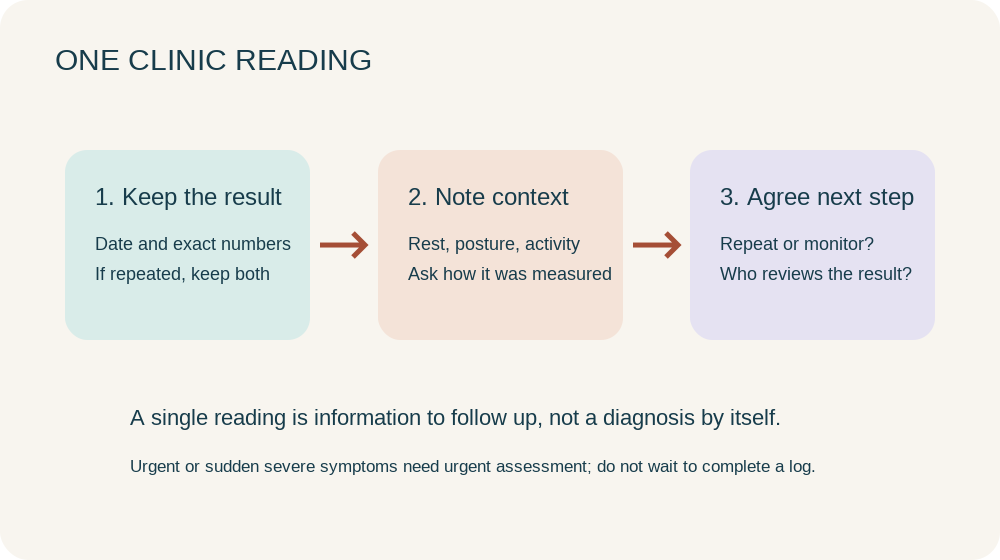
Before leaving, ask for the recorded numbers and the date. Blood pressure is written as two numbers: the pressure when the heart beats and the pressure between beats. The clinic should be able to tell you which number was higher and whether another reading was taken. Keep the numbers exactly as given rather than relying on memory or rounding them.
Note the setting too. Was this a routine appointment, a pharmacy measurement or a visit for another concern? Had you just walked quickly, climbed stairs, smoked, had tea or coffee, exercised, or felt rushed? Were you in pain or anxious? These details do not explain away a high reading. They help the professional decide whether the measurement conditions might have affected it and what kind of confirmation is appropriate.
Ask whether the cuff fitted your arm and whether you were seated quietly with your back supported, feet on the floor and arm supported around heart level. The CDC and ICMR describe measurement steps because posture, talking, a cuff that is too small, and recent activity can change a reading. Do not assume a technique problem occurred; ask what happened and whether the clinic repeated the measurement.
If another reading was taken, ask whether both values were recorded and which one the clinician used. Keep any written result with the date and facility name.
Why one reading may not settle the question
Blood pressure varies. It can differ between visits and settings, and a person may have a higher measurement in a clinic than outside it. Recent activity, caffeine or tobacco, talking during measurement, discomfort, stress, and the way the cuff is applied can contribute to variation. A measurement taken at home can also be inaccurate if the device, cuff size or technique is unsuitable.
Variation is not a reason to ignore the reading. Persistent high blood pressure often has no obvious symptoms, and feeling fine cannot confirm that the number is harmless. Equally, a single number cannot establish a long-term pattern. A clinician considers repeat measurements and relevant health information rather than treating a brief snapshot as the whole assessment.
Guidelines describe confirmation in different health systems. The ICMR adult workflow is the India-specific reference for this article and outlines careful measurement and confirmation, while allowing clinical judgement for particular situations. The US Preventive Services Task Force recommends out-of-office confirmation before starting treatment for adults with a positive screening result in its US screening context. That recommendation is not an interchangeable rule for every Indian clinic; ask the professional looking after you which local plan fits your circumstances.
What a clinic may suggest next
Depending on the first result and your circumstances, the professional may repeat the measurement after a quiet rest, arrange another clinic visit, or discuss measurements outside the clinic. They may also review prior readings, medicines, health conditions and family history. This is a conversation about confirming a pattern and deciding whether further assessment is needed, not a self-diagnosis exercise.
Some people are asked to use a validated home monitor for a defined period. Others may be offered ambulatory monitoring, where a device takes readings across the day and night. Availability differs between facilities. If monitoring is suggested, ask which device and cuff to use, how often and when to measure, how to write down results, and when to return or share them. Do not borrow a device with an unsuitable cuff or change a prescribed medicine based on readings without speaking to the prescriber.
Ask whether you should bring the monitor to the clinic so someone can compare it with the clinic equipment and check your technique. If the clinic recommends only another appointment, ask when to book and what to do if you cannot attend at that time. A clear plan is more useful than repeatedly checking without knowing how the results will be reviewed.
If cost, travel, language, disability access or time off work makes follow-up difficult, say so. Ask whether the facility offers a practical way to confirm readings and how you will receive the results.
If you are asked to measure at home
Get instructions from the clinician or clinic. General measurement guidance recommends avoiding exercise, smoking and caffeine for about 30 minutes beforehand, emptying your bladder, and sitting quietly for around five minutes. Use a monitor and cuff suited to your arm. Sit with your back supported, feet flat and legs uncrossed. Rest your arm on a surface around heart height, place the cuff on bare skin as directed, and do not talk during the measurement.
Follow the schedule you were given. If asked to take more than one reading, record each result and the time rather than choosing the lowest number. Note anything the clinician specifically asked you to record, such as symptoms or a missed measurement. A simple log should include date, time, reading, arm used if requested, and any relevant circumstances. Do not add a conclusion such as “normal” or “dangerous” unless your clinician has explained how they want the results described.
If the monitor displays an error, the cuff slips, or you are unsure about technique, note that and ask the clinic. A phone app or wearable is not automatically a substitute for a validated upper-arm monitor.
If home readings make you anxious, or you find yourself checking again and again, tell the professional. Ask for a written schedule and a point of contact for questions. More measurements are not always more useful if nobody has agreed how they will be interpreted.
Questions worth asking at follow-up
You might ask: “Was this a screening measurement or part of an assessment?” “Was it repeated after I rested?” “Would another clinic reading or home monitoring help confirm the pattern?” “Which monitor and cuff should I use?” “How many days should I measure, and when should I send the results?” “Should I bring a list of my medicines or previous readings?”
Also ask what the next step is if you miss a measurement, cannot afford or access a monitor, or cannot return on the suggested date. If you already take medicines, ask whom to contact if you have questions about them. Do not stop, start or change a medicine because of one clinic number unless the professional who prescribed it gives you that instruction.
Pregnancy, existing health conditions, current medicines and symptoms can change what a clinician wants to do. Mention these and ask them to explain any unclear plan.
For broader preparation, you can use our midlife appointment preparation guide and observation notes resource. These can help you keep dates and questions together; they do not assess blood pressure or determine a diagnosis.
When not to wait for routine follow-up
A routine plan to repeat a reading is not a reason to delay urgent help if you develop a serious or sudden symptom. Seek emergency medical care for symptoms such as chest pain, severe difficulty breathing, fainting, sudden weakness or numbness, trouble speaking, or a sudden severe change in vision. These symptoms can have several causes and need urgent assessment; do not try to decide whether they are due to blood pressure at home.
If you feel acutely unwell while at a clinic, tell staff immediately. If you are at home and symptoms are severe or sudden, use local emergency services or go to the nearest emergency department. Do not wait to complete a home log or for a scheduled appointment. The symptom examples here are not a complete list, and the absence of these symptoms does not confirm that a blood pressure result is safe to ignore.
If you have no urgent symptoms, follow the timing given by the clinician and ask what number or change should prompt an earlier call. Do not use an online article to set a personal threshold. A clinician who knows your history can give advice for your situation.
A simple way to leave with a plan
Before you leave the conversation, check that you know: the exact reading and date; whether it was repeated; how and when it will be confirmed; who will review any home or ambulatory readings; and what to do if symptoms or access problems arise. Write down the facility or clinician contact route and the planned review date.
The reading deserves a follow-up plan that makes clear who will interpret the measurements. If anything is unclear, ask the clinic to explain it in plain language.
Frequently asked questions
Does one high clinic reading mean I have hypertension?
Not by itself. A clinician generally considers measurement quality, repeat readings and your health context before deciding whether a persistent pattern is present. Keep the result and ask what confirmation plan is appropriate for you.
Could nervousness or rushing affect the number?
Stress, recent activity and measurement technique can affect a reading, but they do not prove why yours was high. Record what was happening and ask whether a careful repeat or out-of-clinic measurement would be useful.
Should I buy a home blood pressure monitor straight away?
Ask the clinician first which type and cuff size are suitable and whether home monitoring is needed. If you are asked to measure, get a schedule and instructions for sharing the readings rather than checking repeatedly without a review plan.
Should I change my medicine after one high reading?
Do not start, stop or change a prescribed medicine based on this article or one measurement. Contact the professional who prescribed it and follow the plan they give for your circumstances.
What if I feel well and have no symptoms?
High blood pressure may not cause noticeable symptoms, so feeling well does not settle what the reading means. Follow the clinic's advice about confirmation and seek urgent care if severe or sudden symptoms develop.
What symptoms mean I should seek urgent help?
Seek emergency assessment for sudden chest pain, severe breathlessness, fainting, sudden weakness or numbness, trouble speaking, or a sudden severe vision change. Do not delay urgent care to repeat a measurement or finish a log.
Sources and further reading
- Indian Council of Medical Research, Standard Treatment Workflow: Hypertension in Adults
- Centers for Disease Control and Prevention, Measuring Your Blood Pressure
- US Preventive Services Task Force, Hypertension in Adults: Screening
- Centers for Disease Control and Prevention, About High Blood Pressure
- World Health Organization, Hypertension fact sheet
This resource provides general information and does not diagnose a condition or replace advice from a qualified practitioner.