
On this page
The short answer: Fibroids often get smaller after menopause, but the size and speed of change vary. A 2024 study followed a selected group of 97 people for ten years and found that shrinkage differed across the group. A previous fibroid can help explain your history, but it does not prove the cause of a new symptom. Bleeding after menopause needs assessment, even if it happens once.
What is a fibroid?
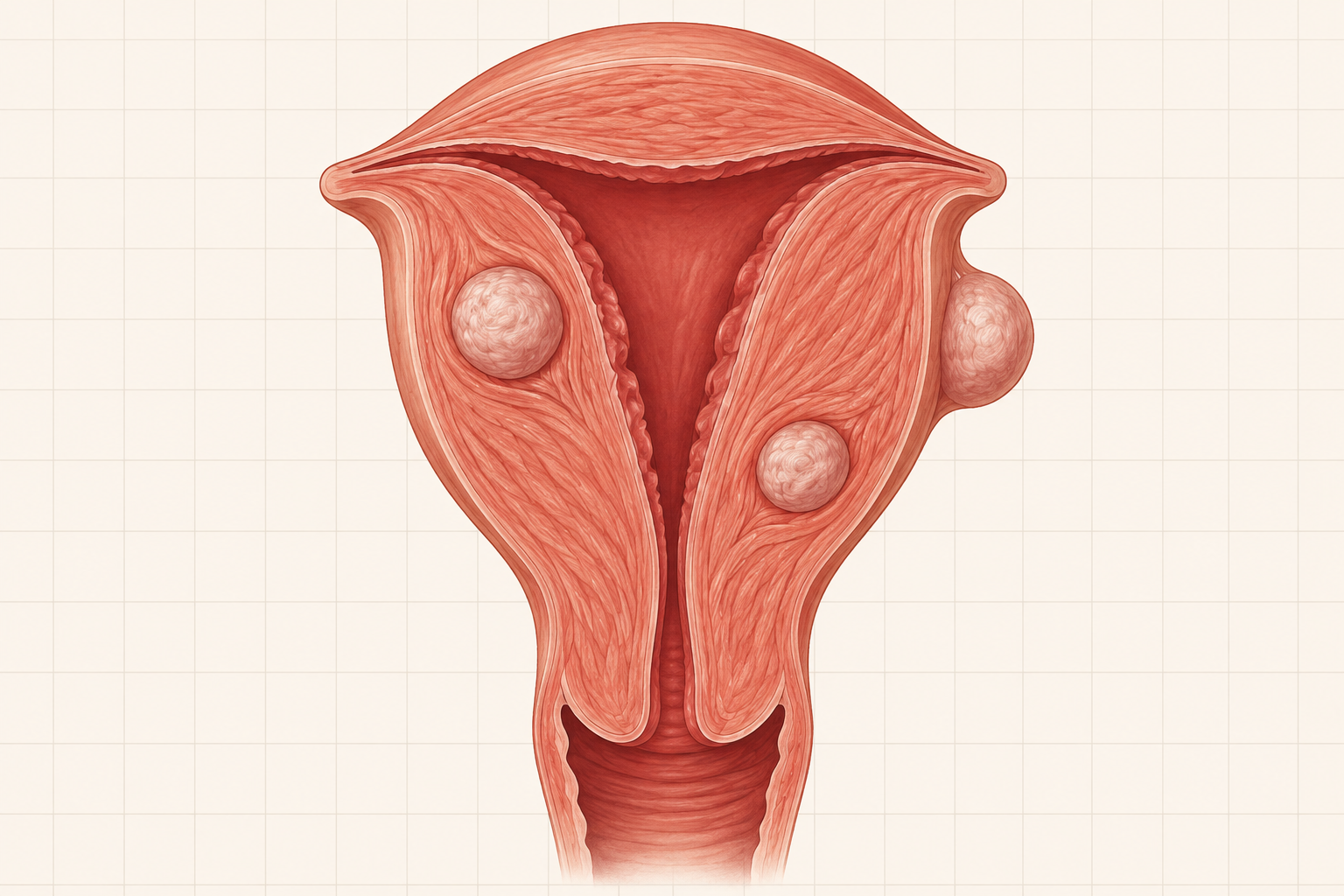
A fibroid is a common, non-cancerous growth that develops in or around the uterus. Fibroids can differ in size, number and position. Some cause no symptoms and appear on a scan done for another reason. Others can be linked with heavy or painful periods, abdominal or lower-back pain, urinary changes, bowel symptoms or discomfort during sex.
Those symptoms can have other causes too. A list of symptoms cannot tell you whether a fibroid is present or whether it explains what you feel. If you have a previous scan, keep a copy or note the date and the finding. If you do not have a confirmed diagnosis, describe the symptom instead of labelling it a fibroid.
The distinction matters near menopause, when cycle patterns can change and several health questions can overlap. The broad guide to sudden heavy periods after 40 covers heavy bleeding during the years before menopause. This page focuses on what a known or suspected fibroid may mean as menopause approaches and after periods stop.
Do fibroids shrink after menopause?
Many fibroids shrink after menopause, but this is a tendency, not a promise about every fibroid. The U.S. Office on Women’s Health notes that fibroids often shrink after menopause. The NHS also says fibroids mainly affect people who have not been through menopause. Neither statement means that every fibroid will disappear or that every symptom will stop.
A 2024 retrospective study tracked 97 patients from one specialist myoma clinic, with yearly ultrasound measurements for at least ten years after menopause. The study reported shrinkage across the group, while the amount differed with factors such as the number of nodules. This was a selected group with fibroids in a particular size range, not a forecast for everyone. The study cannot tell you how your own fibroid will change.
Menopause itself is a point defined after 12 months without a period when another cause or medical intervention does not explain it. The WHO definition of menopause can help distinguish the transition from the time after the final period. It does not predict when a fibroid will shrink.
Can fibroid symptoms continue after periods stop?
Yes, a person can still have symptoms after menopause. A fibroid may remain, and symptoms such as pressure or pain can have more than one explanation. A smaller measurement does not automatically tell you whether a symptom should be ignored. A symptom change deserves a conversation on its own terms.
The 2024 study does not provide a rule for deciding whether a symptom comes from a fibroid. It measured the diameter of selected nodules over time. It was not a study of every possible cause of pain, pressure or bleeding. This is why your symptoms and a scan result are separate pieces of information for a practitioner to consider.
The same caution applies before menopause. Heavy bleeding can occur with fibroids, but it can also have another cause. If you are still having periods, note whether bleeding is new, heavier, longer, or occurring at a different point in the cycle. For a conversation plan, see how to prepare for a midlife health appointment. You do not need to decide what is causing the change before you ask for an assessment.
What if bleeding happens after menopause?
Contact a practitioner if you see vaginal bleeding after menopause, even if the amount is small or it happens once. The NHS public guidance advises assessment for any postmenopausal bleeding. This is a safety message, not a claim that cancer is the likely cause. Several causes are possible, including non-cancerous changes; a practitioner needs to assess what is happening.
A known fibroid does not establish that it caused the bleeding. The NHS lists other possible causes of postmenopausal bleeding, including changes to the vaginal or uterine lining and polyps. Some causes are less common but need attention. An online article cannot distinguish them. Mention the fibroid history, but do not assume it explains the new bleeding.
If you have not yet reached 12 months without a period, your bleeding may be part of a changing cycle rather than postmenopausal bleeding by definition. That distinction does not tell you what caused it or whether it needs attention. If the pattern is new or concerns you, describe it to a practitioner. The heavy-period guide for people over 40 covers a different question from bleeding after menopause.
If you are unsure whether what you noticed counts as bleeding, describe what you saw and when it occurred. You do not need to wait for it to happen again or identify the source yourself. The NHS describes a UK pathway; it does not set appointment access in India. In your own setting, contact a qualified local practitioner or service that can advise you about assessment. If you feel acutely unwell, use local urgent-care services.
Which details should you bring to a conversation?
Write down when you first noticed the symptom, how it has changed, and whether it comes and goes. If you have bleeding, note the approximate date, whether it happened once or more than once, and whether it began after 12 months without periods. If exact dates are hard to recall, give your best estimate.
Add any prior fibroid information you already have: the date of a scan, the wording of the report, and whether a practitioner discussed follow-up. Bring a medicines list, including hormonal treatments or contraception, and note when a medicine started or changed. This helps the practitioner place your symptom in context. It is not a reason to change a prescribed medicine yourself.
Also note how the symptom affects ordinary activities, such as sleep, work, travel or exercise. You do not need to track every detail or keep a symptom score. A brief account of what changed and what you want clarified is enough to begin.
What questions can help you understand the next step?
You could ask: “Could my past fibroid be related to this symptom, and what else could explain it?” “What does the scan report say about size and position?” “What is the purpose of any assessment you are suggesting?” and “Who will explain the result and when should I follow up?”
If you are still having periods, ask how the practitioner distinguishes a cycle change from bleeding that needs a different assessment. If periods have stopped, say how long it has been since your last one and mention any bleeding. Do not treat a known fibroid as a reason to delay that conversation.
The answer may include uncertainty. Ask what is known from your history, what remains unclear and what would change the plan. This keeps the discussion practical without asking you to interpret an image or choose a treatment from a general article. Yellow’s appointment preparation guide has a simple structure for recording questions before a visit.
This article is general education and does not diagnose fibroids, explain an individual scan or decide whether a symptom needs a particular test or treatment. A practitioner can assess your personal history and symptoms.
Frequently asked questions
Do fibroids always shrink when menopause starts?
No. Fibroids often shrink after menopause, but the amount and pace vary. A small retrospective study followed a selected group for ten years and found differences between people. That group result cannot predict what will happen to a particular fibroid or when a symptom will change.
Can fibroids cause bleeding after menopause?
Bleeding after menopause can have several causes. A previous fibroid may be relevant history, but it does not prove that the fibroid caused new bleeding. Contact a practitioner for assessment even if the bleeding is light or occurs once. Do not wait for another episode to decide whether to ask.
What counts as bleeding after menopause?
Natural menopause is defined after 12 consecutive months without a period when another cause or medical intervention does not explain the absence. If you notice vaginal bleeding after that point, describe it to a practitioner. If you are unsure of the timeline, share your best estimate.
Can a fibroid still cause pressure or pain after periods stop?
A fibroid can remain after periods stop, and people can have symptoms after menopause. Pressure or pain does not identify its own cause. Describe what changed and mention any prior scan. A practitioner can consider your history and decide what assessment may clarify the symptom.
What should I bring to a fibroid appointment near menopause?
Bring any prior scan report, an approximate timeline of bleeding or other symptoms, and a list of medicines or recent changes. Note how the symptom affects daily life and what you want answered. You do not need to interpret a scan or decide which cause is most likely.
Sources and further reading
- NHS, Fibroids, page reviewed 17 March 2026
- NHS, Postmenopausal bleeding, page reviewed 24 September 2026
- World Health Organization, Menopause, 16 October 2024
- U.S. Office on Women's Health, Uterine fibroids, updated 28 February 2025
- Oue et al., Postmenopausal Shrinkage of Uterine Myomas: A Retrospective Study of 97 Cases Monitored Annually for 10 Years, Cureus, 2024
This resource provides general information and does not diagnose a condition or replace advice from a qualified practitioner.