
On this page
The short answer: An online appointment can help you explain what has changed, ask questions and plan a next step. It cannot replace an examination when the practitioner needs one. India’s Ministry of Health and Family Welfare telemedicine guidelines say a registered medical practitioner (RMP) should use professional judgment to decide whether a remote consultation is appropriate or an in-person visit is needed. You can ask how that decision will be made before you book.
Maybe you have been waking at 3am, noticing a change in your periods, feeling unusually anxious, or trying to make sense of a test report. A video call can give you time to describe the pattern and hear what the practitioner wants to clarify. A phone call or text consultation may suit some conversations too. The mode depends on the question, the information available and the limits of remote care. It does not confirm that a symptom is caused by perimenopause.
This guide is for women in India weighing an online appointment. Yellow’s video appointment checklist covers practical details. For a broader question list, see preparing for an appointment.
What happens in an online consultation?
A telemedicine consultation is a health conversation that uses technology to connect a patient and a registered medical practitioner. The Indian guidelines describe video, audio and text as possible modes. The practitioner decides which mode can support the specific conversation. You can ask who you will speak with, how the appointment will run, what the fee covers, and how you can receive a note or prescription if one is appropriate.
The practitioner may ask what changed, when it began, whether it comes and goes, and about periods, medicines or health history. These questions help them understand context; they do not establish a cause. Menopause-related changes can overlap with other health conditions.
You can discuss a report or ask whether an in-person examination is needed. Bring the report, its date and reference information if you have them. The practitioner can explain whether it addresses your question or needs more context. This article does not interpret individual results.
The consultation may end with an explanation, a plan for another conversation, a request for more information, or an offer of an in-person appointment. It may also end without a clear answer if the available information is not enough. That is a useful point to clarify: ask what remains uncertain and what the next step is. A remote visit is a way to start or continue care. It is not a promise that every concern can be settled on a call.
When may a video or phone visit be enough to start?
Remote care can make a first conversation easier when travel or time away from work is difficult. WHO describes telemedicine as care delivered across distance and calls for suitable planning. It does not establish that every appointment belongs online. The question is whether this mode fits your need.
An online visit may help you describe a history, discuss an existing plan or ask which follow-up could help. A practitioner can explain what an examination might involve. New symptoms can change what information is needed, even if you have met them before.
The setting matters. You need a connection that lets you hear and be heard, enough privacy to discuss sensitive details, and a way to share records if the practitioner asks. If you are using a phone rather than video, tell the practitioner if you think a visual assessment may matter. The Indian guidelines describe the practitioner’s role in choosing or changing the communication mode based on the situation.
Reviews of remote consultations describe convenience and choice alongside concerns about communication, privacy and what cannot be assessed remotely. The studies cover other countries and patient groups, so they do not predict your experience or establish what works for every midlife concern.
What can an online appointment not do?
A camera cannot provide every examination. A practitioner cannot palpate a lump, take a sample or perform a pelvic examination through a routine call. They decide whether an image is useful or an in-person examination is needed. Do not send intimate images through an unverified channel; ask how they would be received and stored.
Sound, connection, language, privacy or missing records can also limit a visit. Say if you cannot hear, cannot speak freely or cannot explain a symptom. You can ask to pause, change the mode or arrange an in-person visit. The guidelines leave the suitability decision to the practitioner.
This matters when a symptom needs direct assessment. A visible vulval skin change or sore may need an examination. An online conversation can help you explain what you noticed and ask where to go next, but it should not be treated as the examination itself. If the practitioner suggests a face-to-face appointment, ask what kind of service to contact, how soon to arrange it and what information to bring.
If symptoms feel severe or rapidly worsen, do not wait for a routine online booking. Contact local urgent or emergency care. This article cannot decide what level of care you need. When you are unsure about urgency, use a local medical service that can assess you directly.
How can you check who is on the call?
The Ministry’s guidelines say a telemedicine consultation should not be anonymous. The practitioner should introduce themselves, and there should be a way to verify their credentials and contact details. Check for a name and registration information before the appointment. If you cannot find it, ask the service how to verify the practitioner.
At the start, confirm the practitioner’s name and role. Ask how to check registration and where to contact them after the call. The guidelines say an RMP should display their registration number on prescriptions, electronic communications and receipts.
Ask who else may join, whether the visit will be recorded, who can access your documents and how records are handled. Indian guidance covers consent and confidentiality. Privacy research also describes risks from people nearby, not just technology. Choose a private place when possible; if you cannot, ask about another time or mode.
How should you prepare for a video appointment?
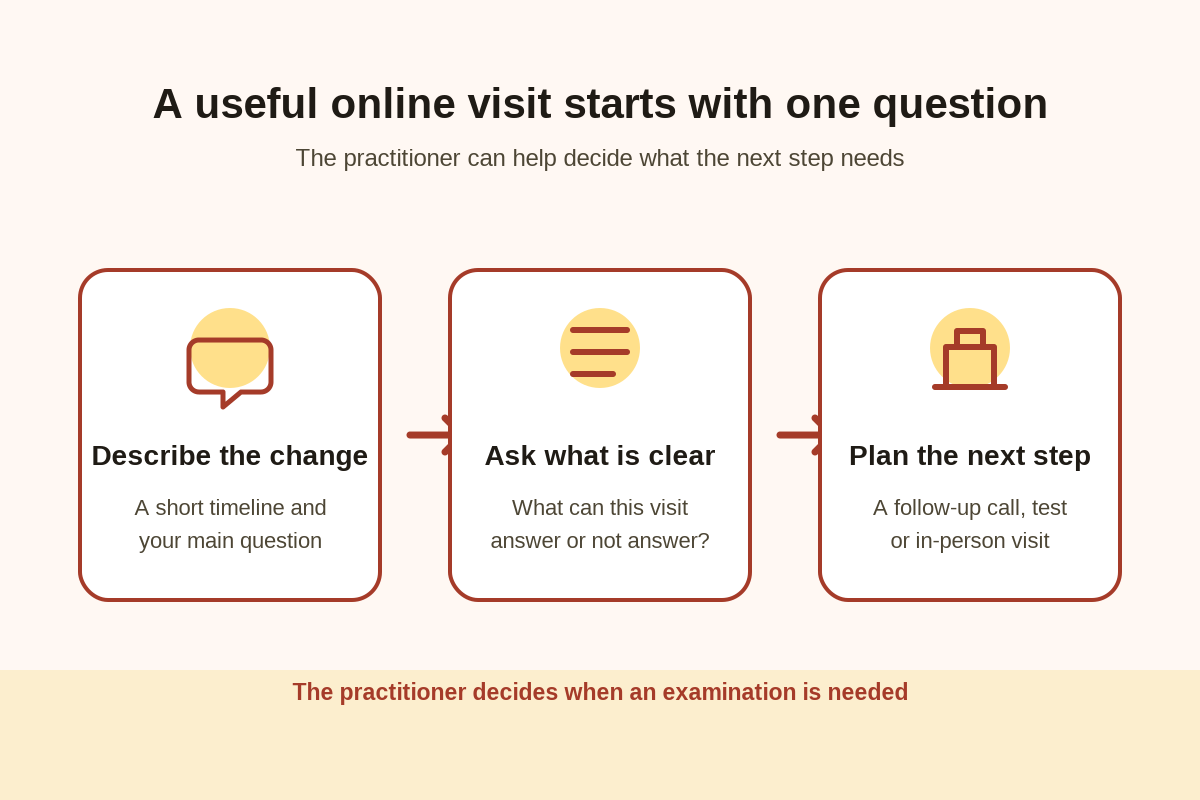
You do not need a perfect presentation. Note the main change, when it began, a recent example and the question you most want answered. A short timeline is more useful than a self-diagnosis.
Keep relevant reports, prescriptions and a medicine list nearby. Do not order tests just to prepare. Ask the clinic which records matter and how to share them. The appointment preparation guide has broader prompts; the video checklist covers connection and privacy.
Check the link, sound and connection. Choose a place where you can speak privately. If you need language or accessibility support, tell the service in advance. If someone will join you, ask how and decide what you want to share.
Start with the main question: “My periods and sleep have changed. What needs assessment?” You do not need to connect a concern to menopause yourself. Describe what is happening and let the practitioner ask follow-up questions.
What should you ask before the call ends?
Ask what remains uncertain and what the next step is. If the practitioner recommends an examination, ask what kind, where and when to arrange it, and whether you need a referral or visit note.
Ask what the current information can and cannot answer, which records would help, and what question a proposed test would address. These questions do not ask for a guaranteed diagnosis or outcome.
Before you disconnect, confirm how to contact the service, whether follow-up has a fee and what to do if the connection drops. If you could not speak privately or explain the concern, ask whether another mode would work better.
Yellow’s role is to help you prepare information and questions for a practitioner. The clinical decision belongs to the registered practitioner, who can decide whether an online conversation is enough or whether to see you in person. Medical information in this article is independent of any paid programme. For another practical resource, see questions to take to an appointment.
Frequently asked questions
Can a menopause doctor diagnose me over video?
A practitioner may be able to assess some concerns through a remote conversation, but the mode and available information matter. India’s telemedicine guidance leaves the decision to the registered practitioner. A video call does not replace an examination or test when one is needed. Ask what the appointment can answer and what would require an in-person visit.
Is a video appointment better than a phone consultation?
Neither mode is best for every question. Video may help when seeing something is relevant, while phone may be enough for a discussion or follow-up. The Indian guidance describes video, audio and text modes and says the practitioner should use judgment about suitability. You can ask which mode fits the concern you want to discuss.
Can I show a test report during an online appointment?
You can ask the clinic how to share a report before or during the appointment. Use the service’s stated method and check who can access the file. The practitioner may ask about the reason for the test, the date and other context. A report does not always answer the question on its own, and this article does not interpret individual results.
What if the practitioner says I need an in-person examination?
Ask what they need to examine, what type of appointment to arrange and whether there is a time frame. A face-to-face visit can provide assessment that a camera cannot, such as palpation or sample collection. A recommendation to meet in person is part of the care plan, not proof that the online appointment failed.
Should I send intimate photos before a video consultation?
Do not send an intimate image through a channel you have not verified. Ask the practitioner or clinic whether an image is necessary, how they will receive it and who can view or store it. The practitioner may still need to examine you in person. You can decline to send an image and ask what other options are available.
What should I do if I do not have privacy at home?
Tell the clinic or practitioner before sharing sensitive details. Ask whether you can change the time, use another private location or switch to a different mode. A review of telemedicine privacy describes risks from people and devices around the consultation, as well as technology itself. You can pause if you do not feel able to speak freely.
This article is general information, not a diagnosis or a substitute for care from a qualified practitioner. If symptoms are severe or rapidly worsening, contact local urgent or emergency care.
Sources and further reading
- Ministry of Health and Family Welfare, Telemedicine Practice Guidelines, 2020
- World Health Organization, Consolidated telemedicine implementation guide, 2022
- Patients' perspective about synchronous teleconsultation with a general practitioner, mixed-method systematic review, 2025
- Mishkin et al., Ensuring privacy in telemedicine, Journal of Telemedicine and Telecare, 2023 (epublished 2022)
- Walthall et al., Patients' and clinicians' experiences of remote consultation, Journal of Advanced Nursing, 2022
This resource provides general information and does not diagnose a condition or replace advice from a qualified practitioner.